
 Have questions?
- Prix ordinaire
- $19.99
- Prix soldes
- $19.99
- Prix ordinaire
- $19.99
Épuisé
- Prix unitaire
- par
Liquid error (snippets/snip-product-variants line 28): product form must be given a product
Free shipping on Canadian orders over $150
Shop now, pay later with Afterpay
Sterile saline is the best option for aftercare. You should use a sterile saline labeled as a wound wash. You can purchase your aftercare from us.
Initially you may experience bleeding, swelling, tenderness or bruising. During healing, you may experience discolouration, itching, secretion of a whitish-yellow fluid (not pus) that will form some crust on the jewelry. The tissue may tighten around the jewelry as it heals, giving a slightly wrinkled appearance. The jewelry may not move freely in the piercing; do not force it.
A piercing may seem healed before the healing process is complete. This is because tissue heals from the outside in, and although it feels fine, the interior remains fragile. Always keep your jewelry in, as new piercings can close within hours. Once your piercing is healed, do not leave it empty for long periods as you may find it difficult to reinsert the jewelry and in trying, cause damage to the channel.
Shop aftercare
These things can cause the formation of scar tissue, piercing bumps or moisture bumps, migration, prolonged healing, and other complications.
Spray the front and back of the piercing with sterile saline solution 2x per day for the first 2 weeks. Spray 1x per day and as-needed for the rest of the healing period. Pat dry with non-woven gauze. Wash hands thoroughly before touching your piercing. You do not need to rotate or move the jewelry back and forth.

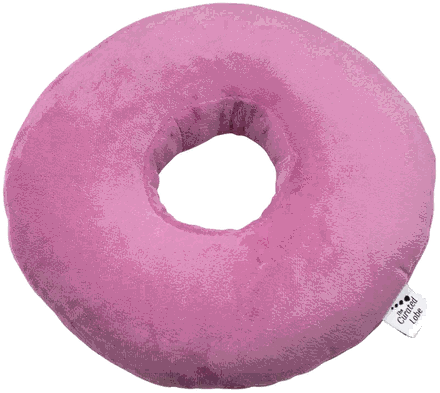
Sleeping on your piercing while the barbell is long for initial swelling can shift the angle and cause piercing bumps. Consider a piercing pillow from us!
Shop the piercing pillow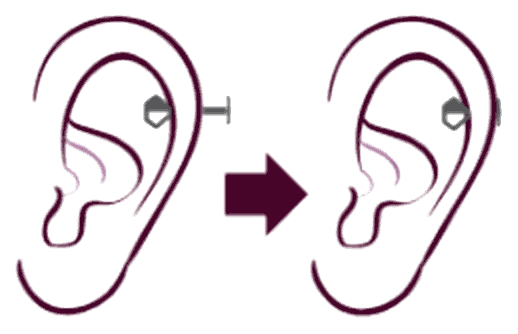
When the swelling has subsided, see us to shorten the length of the barbell so that it's flush and thus less likely to cause bumps and migrate. This is done before the end of the healing period, about 1 month for lobes and 2 months for cartilage. In order to downsize you must have a lot of room on the bar.
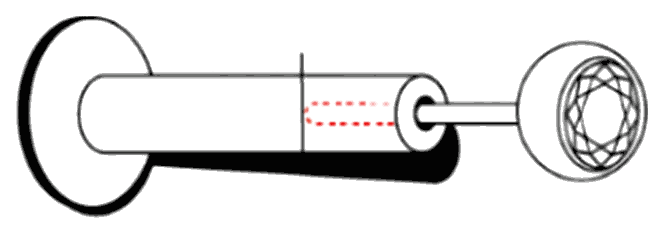
Insert the pin of the decorative top about 1/3 of the way into the hollow barbell.
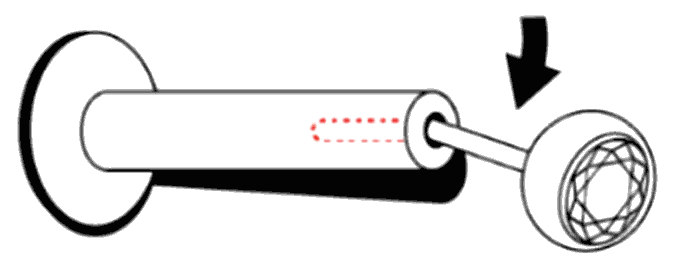
Bend the pin slightly. Do not over bend the pin as you may have trouble getting its shape back. You want just enough pressure to hold the top in place.
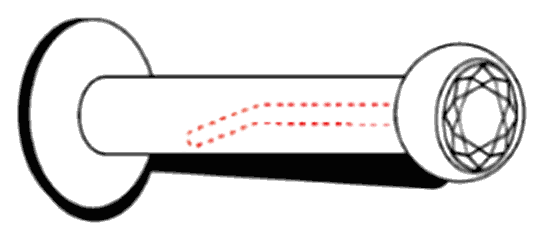
Push the decorative top into the barbell until there is no visible pin remaining. If the connection feels loose, repeat steps. The jewelry is held together by pressure fit. Regularly check that your jewelry is secure.
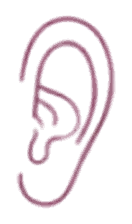
Removal: Pull the barbell and the top apart to separate. The barbell comes out from the back of the ear and the top from the front.
 Lobe 3+ months
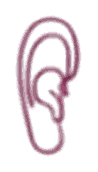 Cartilage 8 to 12+ months
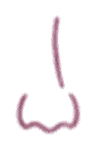 Nose 6+ months

Unless there is a problem with the size or style of the initial jewelry, leave your jewelry in place for the entire healing period. See us to perform any jewelry change that becomes necessary during healing. See us for a glass retainer if your metal jewelry must be temporarily removed (such as for a medical procedure). Even healed piercings can shrink or close quickly! If removed, reinsertion of healing piercings can be difficult or impossible.
In the event the jewelry is knocked out or otherwise lost, put a small, clean stud into the piercing and contact us for info on how to proceed. With clean hands be sure to regularly check threaded and threadless ends on your jewelry for tightness.
If you no longer want the piercing, simply remove the jewelry (or have us remove it) and continue cleaning the piercing until the hole closes. In most cases only a small mark should remain. In the event of an infection, quality jewelry or an inert alternative may be left in place to allow for drainage, if approved by your physician. Wearing long hair tied back while healing is ideal to avoid snagging.
You should not be pierced if you are currently using Accutane or are within 6 months from stopping using the medication. You should also not be pierced while taking anticoagulants or immunosuppressive medications or if you are currently undergoing chemotherapy. You should not be pierced if you are pregnant or breastfeeding.